Organic Reusable Period Pads

Plastic and Toxins
The average period product is loaded with plastic. With over 45 billion menstrual products used every year. Did you know that a pack of conventional pads contains up to five plastic bags worth of plastic? Plus perfumes, chlorine, dyes, pesticides, and feminine products!
Plastic wet wipes are frequently flushed, as well as tampons and even pads! Period products are the fifth most common item found washed up on Europe’s beaches, with 3.9 million flushed down the loo every single day in the UK alone. Incorrectly flushed or thrown away items are found polluting coastlines across the world.
The Law
Do you know that feminine hygiene product brands aren’t required by law to disclose materials in their pads? Tampons, pads, menstrual cups, and discs are considered medical devices by the Food and Drug Administration (FDA) and are not subject to ingredient labeling under federal law.
There is a significant lack of consumer protection laws regarding feminine hygiene products. Only two states have such laws, and they’re not even in effect yet. New York State is the first state currently working on a law to require disclosure of the material.
- ✅ California has enacted new laws that require expanded ingredient disclosure for feminine hygiene products, including period underwear. As of January 1st, 2023, The Menstrual Products Right to Know Act of 2020. (AB 1989) mandates that menstrual products sold in California must clearly and conspicuously list all ingredients used. However, this law only focuses on “intentionally added” ingredients and does not cover contaminants. (AB 2515) The second bill, Take All Menstrual Product-PFAS Out Now (TAMPON) Act, forbids manufacturers from manufacturing, selling, or distributing menstrual products that contain regulated PFAS. Starting January 1, 2025, regulated PFAS will include substances that are intentionally added to the product. On January 1, 2027, the definition of regulated PFAS will expand to include the presence of PFAS in a product or product component at or above a limit to be determined by the Department of Toxic Substances Control.
- ✅ New York has a similar law as of 2021, focusing on “intentionally added” ingredients. The Menstrual Products Right To Know Act (S2387B), championed by New York State Assembly Member Linda Rosenthal and signed by Governor Andrew Cuomo, forces brands to print a simple list of ingredients on all menstrual products.
- ✅ Federally, in September 2022, the Menstrual Products Right To Know Act of 2022 (H.R.8829) was introduced to the House, but as of the current date of writing (March 2023), there has been no progress on the bill.
Note: Since I am located in California, I can disclose to you all the ingredients listed on that packaging, thanks to the local law!!
In August 2014, Women’s Voices for the Earth commissioned testing on menstrual pads. The certified laboratory, STAT Analysis Corporation, analyzed the products for the volatile organic compounds. The results of the testing indicate that both scented and unscented pads emit toxic chemicals, including chemicals identified by the U.S. Department of Health and Human Services National Toxicology Program, the Agency for Toxic Substances and Disease Registry, and the State of California Environmental Protection Agency as carcinogens, and reproductive and developmental toxins. None of these chemicals is disclosed on the product by the manufacturer.
Why natural and safer feminine products?
🍃Have you ever had vaginal irritation, such as candida or other skin rashes? Many times, they could be caused by toxic products such as conventional lubricants, pads or tampons, and even toilet paper. Elevated levels of toxic chemicals are found in menstrual pads. Choose products that are Certified Organic and toilet paper that is unbleached and fragrance-free to avoid skin reactions. And pick non-toxic feminine products such as organic pads, organic tampons and organic feminine wash.
🌸 We need to take care of our vulva and vagina like our face, using organic cleaning, hydrating, and moisturizing, pH balanced products for this sensitive, delicate and temperamental area of our body.
Conventional Reusable Period Pads
Avoid conventional reusable period pads made with synthetic materials across their different functional layers. They are made with petroleum-derived plastics and chemical finishes.
-
❌ Thermoplastic Polyurethane (TPU): A plastic film laminated onto fabric to block liquid. A synthetic polymer.
-
❌ Polyurethane Laminate (PUL): Polyester fabric coated with a thin plastic film. It’s the most widely used waterproof layer in conventional cloth pads and period undies.
-
❌ Polyester Microfiber / Fleece: Synthetic fibers engineered to trap liquid quickly. Microfiber tends to retain odors over time and sheds microplastics during laundering.
-
❌ Acrylic & Nylon Blends: Used to increase absorbency density without adding bulk.
- ❌ Synthetic Dyes & Color Fasteners: Azo dyes and heavy-metal fixatives used on synthetic yarns, which may cause contact dermatitis.
-
❌ PFAS: short for perfluoroalkyl and poly-fluoroalkyl substances, are a group of over 4,700 synthetic chemicals that have been used since the 1990s to make surfaces resistant to stains, water, and grease. They are commonly referred to as “forever chemicals” because these chemicals do not biodegrade; they can build up in the human body and interfere with our systems. The most commonly studied PFAS chemicals “can cause reproductive and developmental, liver and kidney, and immunological effects,” according to the EPA. PFAS are added intentionally by some manufacturers to create a waterproof layer. In this article published in 2020 by Sierra Magazine, they found toxic chemicals in Thinx products. Thinx menstrual underwear was tested by Dr. Graham Peaslee, a physics professor at the University of Notre Dame, whose research focuses on PFAS. They found the presence of PFAS in the Thinx products at “high levels,” especially on the inside layers of the crotch. The crotch in the Thinx underwear had 3,264 parts per million (ppm)
Greenwashing Reusable Period Pads
Avoid Greenwashing reusable period pads made by brands that pretend to be organic, natural, eco-friendly, and green when they are not. They will use misleading and deceiving marketing tactics to convince you to buy their products!
- ❌ Partial Material Transparency: A brand might advertise “100% Organic Cotton” on the outer cover, but the inner absorbent core or structural layers may contain synthetic polyester, acrylic, or conventional plastic binders.
- ❌”Biodegradable” or “Plastic-Free” Labels: Reusable sports pads usually require a hidden waterproof backing layer (often Thermoplastic Polyurethane, or TPU) to prevent leaks during movement. While TPU makes reusables functional and durable over single-use plastic, claiming the entire pad is “plastic-free” or fully “biodegradable” without clear disassembly instructions is misleading.
- ❌ Antibacterial & Antimicrobial Coatings: Silver nanoparticles, triclosan, or zinc-based chemical treatments applied to synthetic cores to curb odor-causing bacteria. These can migrate onto skin and disrupt the intimate microbial balance.
Approved Organic Reusable Period Pads
🍃 Organic reusable period pads are the solution to avoid spending money in conventional and greenwashing period pads, which are filled with chemicals, and to not contribute to the problem of 20 billion single use disposables that end up in landfills and oceans every year,
Made of 100% organic cotton and is the equivalent to a standard-size maxi pad with medium absorbency, they keep you you leak-free and is perfect for everyday use. By switching to reusable products:
- Save on average, $150/year
- Keep 12,000-16,000 lbs of disposable products out of landfills
- Avoid unnecessary exposure to fragrances, plastics, adhesives and other toxic chemicals
- Not have to run to the store last minute every month
- Reduce their environmental footprint by not paying for the manufacturing and distribution costs in the creation of disposables.
The Best Reusable Period Pads
- ✅ GOTS (Global Organic Textile Standard) Organic Cotton: Organic cotton is better since it is made without toxic chemicals so you can keep your vagina free from pesticide residues, plastic or toxic residuals, or rayon found in conventional cotton. 100% organic cotton is grown without the use of pesticides or GMOs and goes through a non-toxic cleansing process that uses oxygen instead of chlorine bleach. Certified organic tampons do not contain titanium dioxide. 100% Certified organic cotton tampons are free of synthetic fibers, chemical additives, fragrances, dyes, chlorine bleach, GMOs, pesticides, toxins, latex, and formaldehyde.

- ✅ Biodegradable packaging: Pick compostable packaging
- ✅ Compostable, Biodegradable cardboard applicators or applicator-free
- ✅ Recycled cardboard packaging
- ✅ Hypoallergenic
- ✅ Plastic-free
- ✅ Zero-Waste Packaging
🍃Here you will find only organic period pads and liners made from sustainable natural materials, which are soft, breathable, and biodegradable. Only organic pads are made with nothing more than 100% organic cotton and no additives. It is important to change them once they are saturated to avoid natural bacterial odor buildup. Choosing plastic-free pads lets the delicate skin breathe and cuts out plastic pollution.
Natural materials such as 100% certified organic cotton protect our oceans, our soil, and cotton workers.
The organic reusable pads listed on this page are made with home-compostable plant-based plastic made from renewable materials.
The Best Organic Reusable Period Pad Brands
- 🌿 Tampon Tribe 10% promo code: PRETTYORGANICGIRL
- 🌿 The Period Company 10% off code: PRETTYORGANICGIRL
- 🌿 Wuka
Shop with my links to support my research! 💖




Tampon Tribe Organic Reusable Pads
🌸 Tampon Tribe is one of my favorite organic period care brands!
It offers certified organic cotton period pads, organic pantyliners, organic period underwear, organic period cups, and organic tampons, with no toxins or chlorine bleach. 100%-plastic free!!
🌿These plastic-free reusable organic cotton pads are the best environmentally friendly alternative to standard disposables, with no 'bulky' feeling. Sleek and streamlined design. They can be used for bladder control as well.
MEDIUM FLOW - holds up to 3 tampons' worth. Suitable for medium flow days, or change more regularly for heavy days.
2-pack of Wash & Wear Regular pads.
🍃What is even better is that it will come in a cute jute bag that has been designed to sit in your bathroom, all plastic-free, and wrapped in recycled paper.
- ✅ Made with ultra-soft certified organic cotton.
- ✅ 3-layer protection with odor control keeps things discreet.
- ✅ Super absorbent layer that locks in everything!
- ✅ ZERO LEAKS - patented leak-free gravity edges.
- ✅ V-shaped straps hold everything in place.
- ✅ No PFAS, all plant-based, vegan, hypoallergenic
- ✅ Zero waste packaging!
- ✅ Women-owned
MATERIAL: ultra-soft certified organic cotton
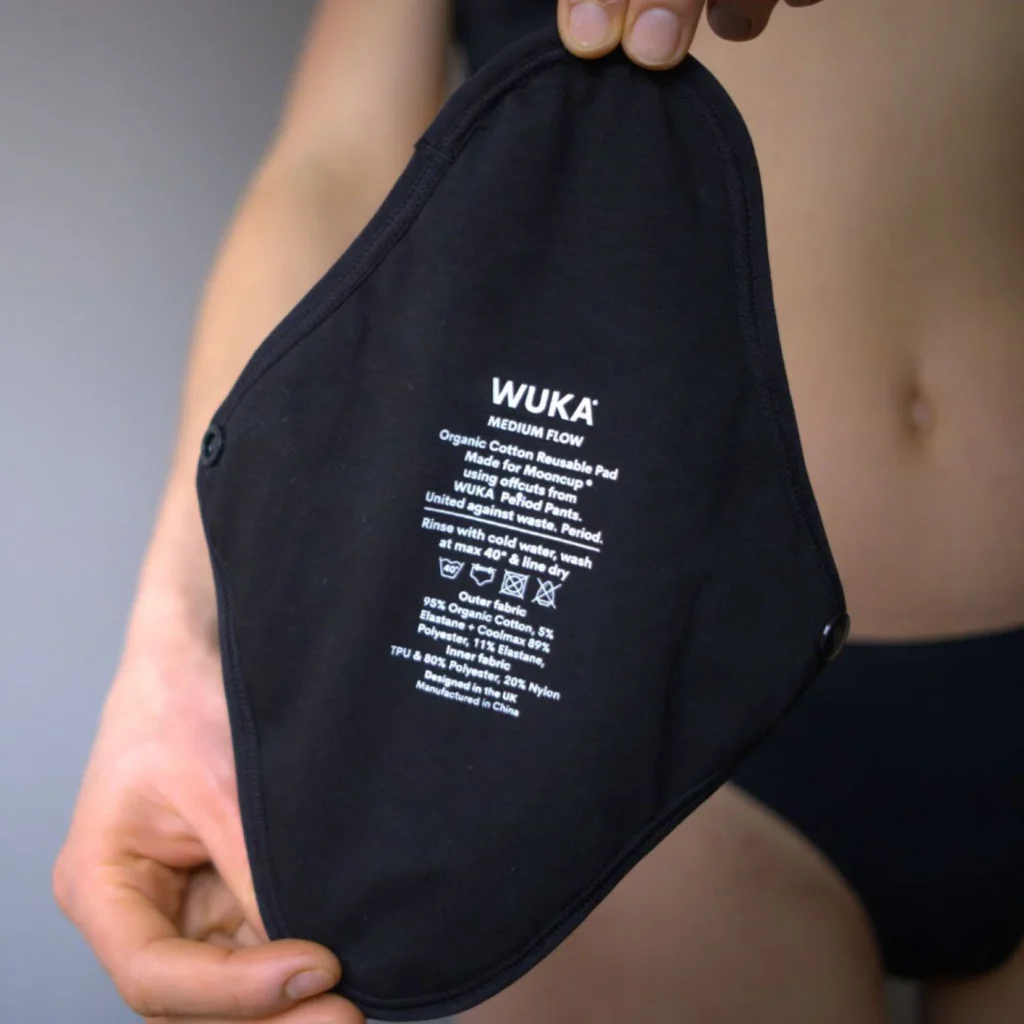
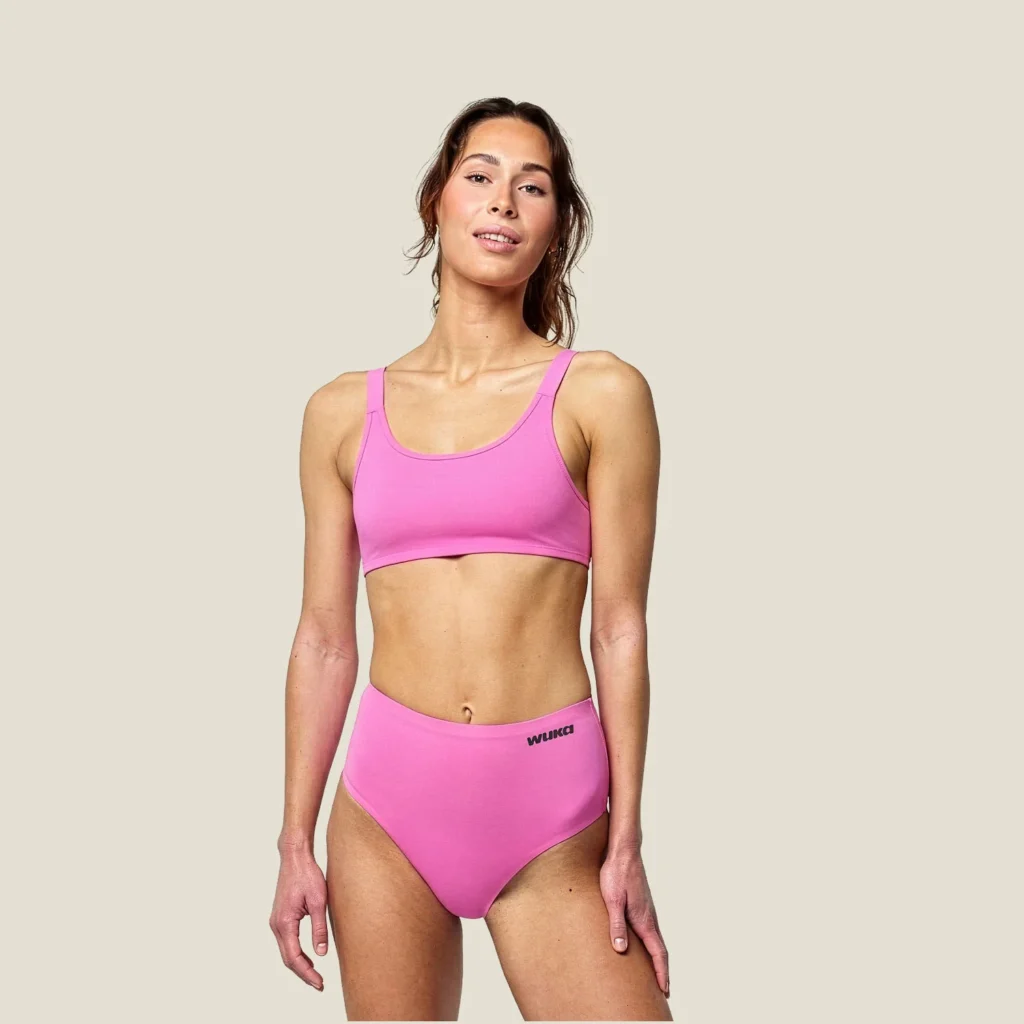
WUKA Reusable Organic Period Pads
🌸 WUKA Reusable Organic Period Pads
🌿These organic reusable period pads are made with certified organic cotton
GOTS (Global Organic Textile Standards), BCI (Better Cotton Initiative), and OEKO-TEX certified, which prohibits all chemicals that don't meet rigorous conditions, including flame retardants, PFAS, and toxic dyes.
Independently tested by Highstreet Textile Testing Services Ltd (HTTS) and SGS, who report that there is no PFAS.
No VPL: no visible panty line.
Stretchy, great for bloating, postpartum, and changing body sizes.
- ✅ GOTS Certified Organic Cotton
- ✅ BCI (Better Cotton Initiative)
- ✅ OEKO-TEX certified
- ✅ PFAS-free
- ✅ No silver treatments or antibacterial treatments
- ✅ Regularly tested for additional chemicals
- ✅ Seamless Construction: Figure-Flattering Fabric
- ✅ B Corp
MATERIAL: GOTS (Global Organic Textile Standard) organic cotton, Tencel Modal made from sustainable beech trees, to Econyl made from plastic waste from our oceans.
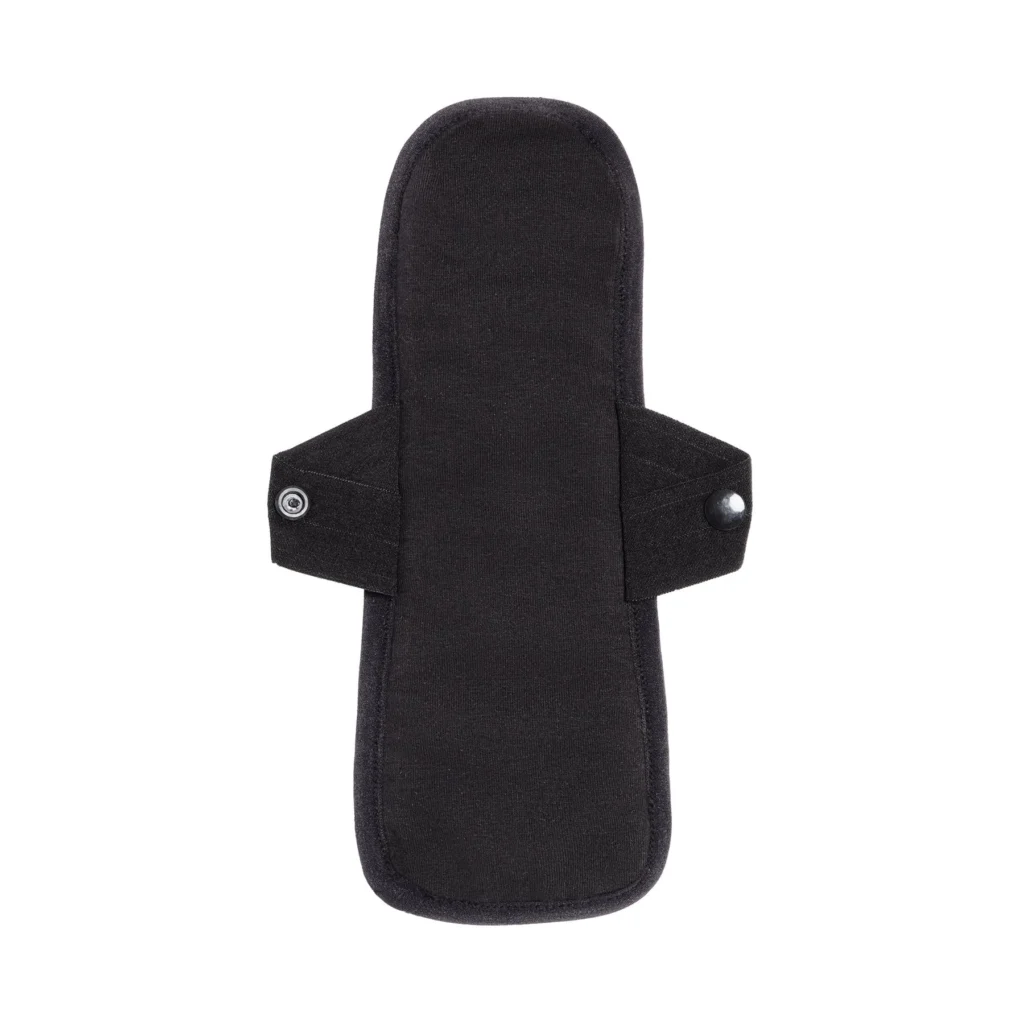
The Period Company Organic Reusable Period Pads
🌸 The Period Company Reusable Period Pads
🌿These organic reusable period pads are made from soft, comfy organic cotton and feature a four-layer padded towel for superior absorption. They offer comfort, protection, and less waste. Fast-wicking and leak-proof, they’re a reusable upgrade from disposables.
Holds up to 20ml of period flow – about 4 tampons or 3 disposable
🍃 The COOLMAX® gusset fabric provides ultra-fast absorbency, while the leak-proof layer keeps you dry and secure all day.
They rigorously third-party test every product and reject any materials that don’t meet their PFAS-free standard. Also great for postpartum and perimenopause. They have: For Heavy to Medium Flows, For Medium to Light Flows, Swim, Teens' period. Overnight
- ✅ GOTS Certified Organic Cotton
- ✅ OEKO-TEX Standard 100
- ✅ PFAS-free standard.
- ✅ UL-validated
MATERIAL: GOTS-certified organic cotton offcuts

Smartliners Organic Cotton Pads
🍃 🌸 This is the ONLY GOTS-certified organic reusable pad I found.
🌿These reusable organic period pads are made with GOTS-certified organic cotton.
Developed by the founder, Yasmeen, thanks to her manufacturing background, she developed a patented super-absorbent material called Smartsorb™, which incorporates 100% organic cotton, free of any harmful, toxic chemicals. Smartliners™ washables feature an exclusive Smartsorb™ super-absorbent technology.
Made with 100% certified organic cotton, which is better for you and kind to the environment, Smartliners™ products are the ultimate healthy-living and eco-friendly solution available today.
- ✅ 100% Certified Organic Cotton
- ✅ No Toxic Adhesives or Layers
- ✅ Organically dyed (plant-based)
- ✅ No Plastics of any Kind
- ✅ Odor-Resistant Materials
- ✅ Environmentally Friendly
- ✅ Plastic-free
MATERIAL: GOTS-certified organic cotton
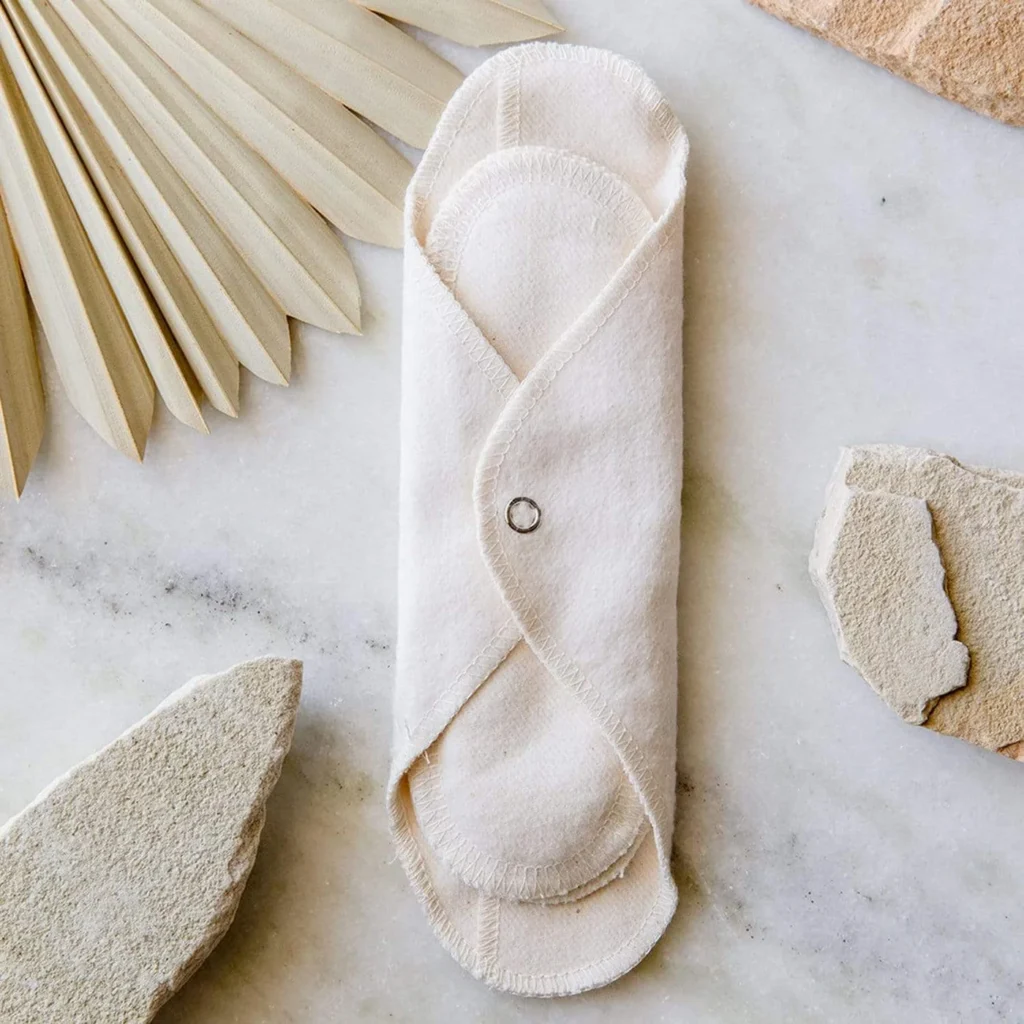
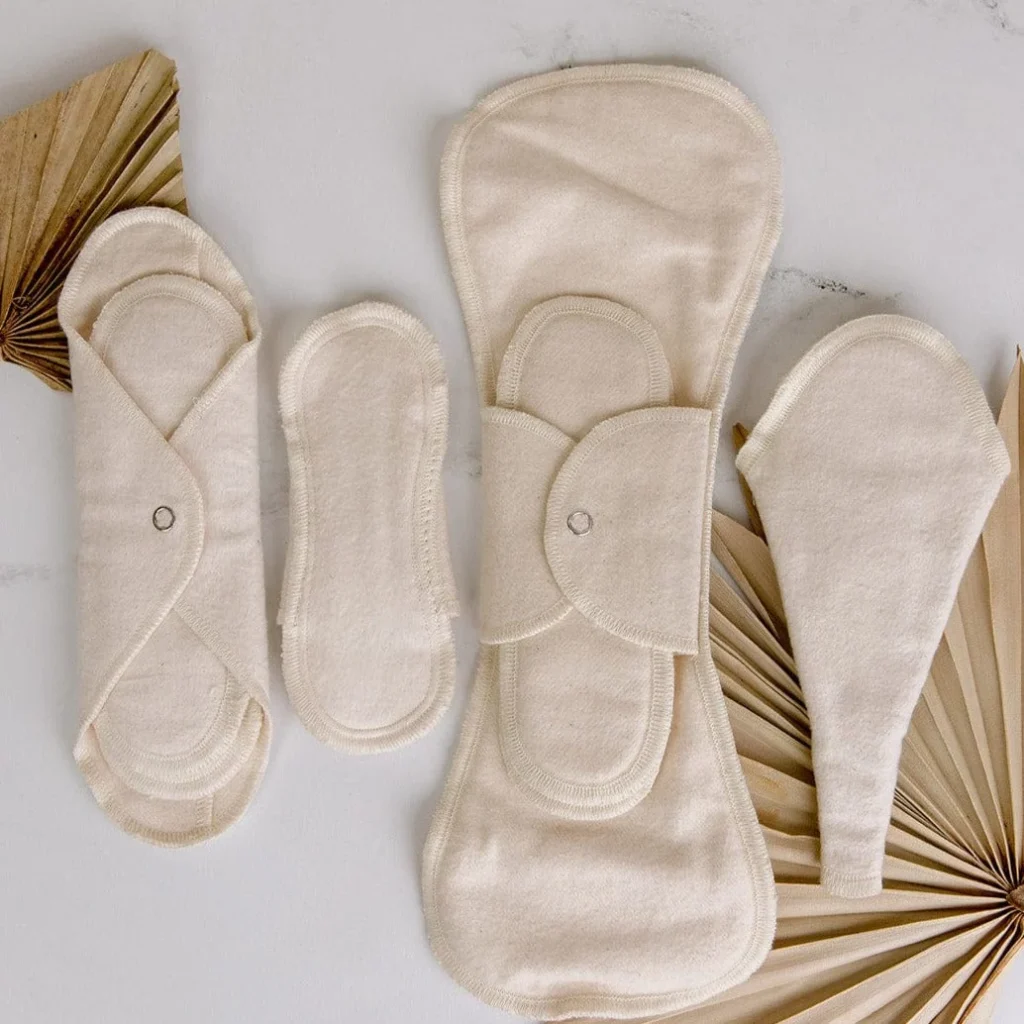
ZeroWasteStore Organic Cotton Reusable Period Pads
🌿 ZeroWasteStore Reusable Day Pad
🌿 These organic cotton reusable period pads are handmade with organic cotton and are NOT blended with other materials like other brands! Each pad is customizable with a unique three-part design, allowing you to use 1-3 absorbent inserts according to your flow. Comes unpackaged with instructions.
They help target the problem of 20 billion single-use disposables that end up in landfills and oceans every year
One is the equivalent of a standard-size maxi pad with medium absorbency; the handmade Day Pad will keep you leak-free and is perfect for everyday use.
- ✅ 100% organic cotton
- ✅ Handmade
- ✅ Biodegradable and compostable
- ✅ B Corp
- ✅ Plastic-free
- ✅ Zero-waste
- ✅ Family-owned
MATERIAL: 100% organic cotton
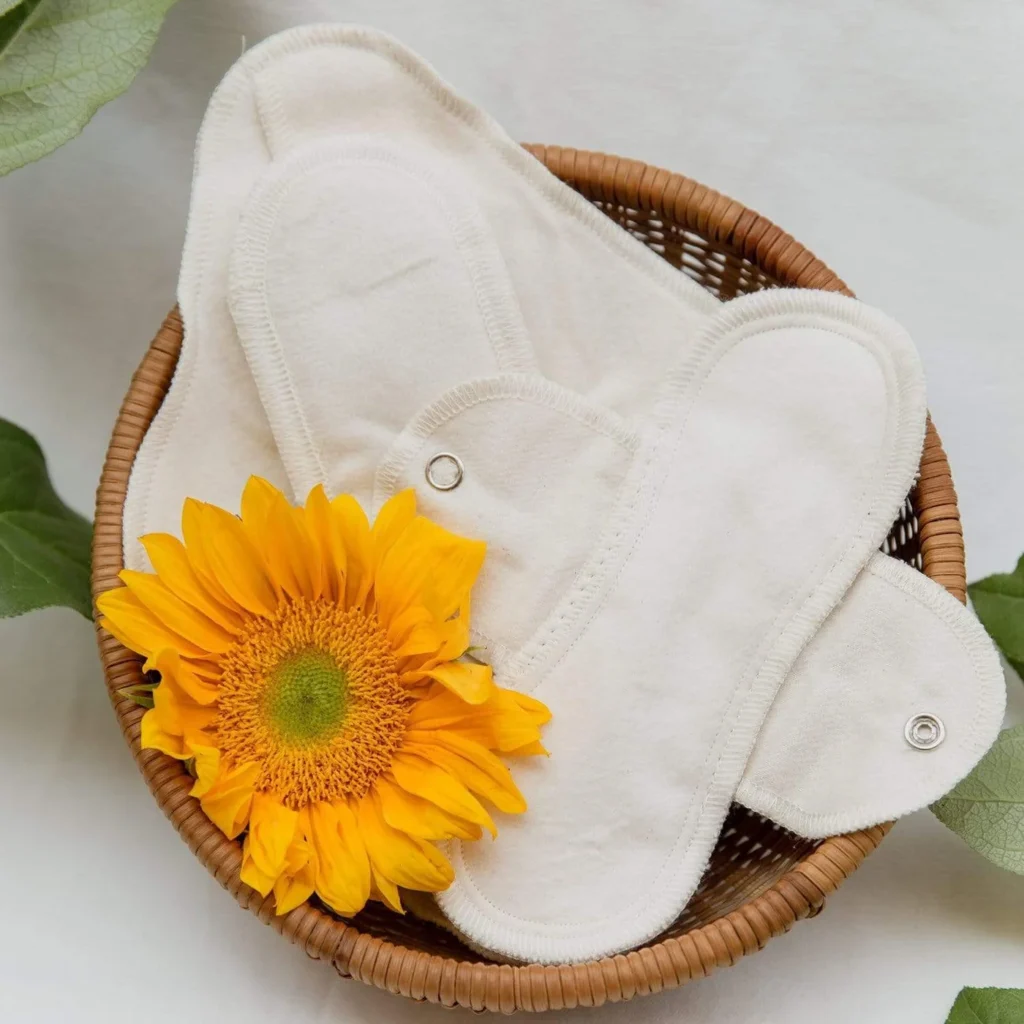
ZeroWasteStore Organic Cotton Reusable Panty Liners
🌿 ZeroWasteStore Reusable Day Pad
🌿 These organic cotton reusable panty liners are handmade with organic cotton and are NOT blended with other materials like other brands! Each pad is customizable with a unique three-part design, allowing you to use 1-3 absorbent inserts according to your flow. Comes unpackaged with instructions.
They help target the problem of 20 billion single-use disposables that end up in landfills and oceans every year
Slim and absorbent, the Pantyliner is the go-to for light, everyday protection or as a backup for your non-toxic menstrual cup. Their sleek design is made of breathable 100% Organic Cotton and is so comfortable you'll forget you're wearing one.
- ✅ 100% organic cotton
- ✅ Handmade
- ✅ Biodegradable and compostable
- ✅ B Corp
- ✅ Plastic-free
- ✅ Zero-waste
- ✅ Family-owned
MATERIAL: 100% organic cotton
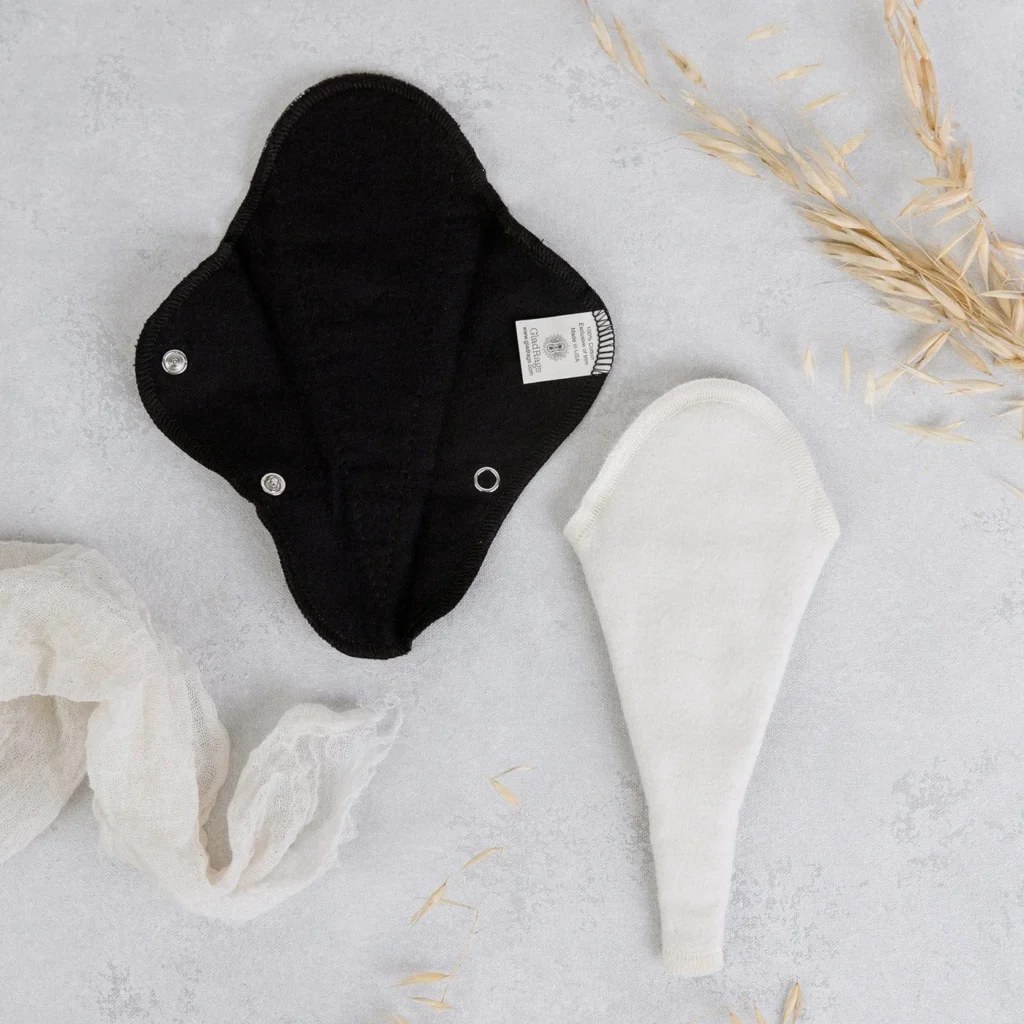
ZeroWasteStore Organic Cotton Reusable Thong Pantyliners
🌿 ZeroWasteStore Reusable Thong Panty Liners
🌿 These organic cotton reusable thong panty liners are handmade with organic cotton and are NOT blended with other materials like other brands! Each pad is customizable with a unique three-part design, allowing you to use 1-3 absorbent inserts according to your flow. Comes unpackaged with instructions.
A zero-waste addition to your organic thongs!
They help target the problem of 20 billion single-use disposables that end up in landfills and oceans every year
Perfect for light, everyday protection, or as a backup for your non-toxic menstrual cup, the Thong Pantyliner is so comfortable you'll hardly know you're wearing it.
- ✅ 100% organic cotton
- ✅ Handmade
- ✅ Biodegradable and compostable
- ✅ B Corp
- ✅ Plastic-free
- ✅ Zero-waste
- ✅ Family-owned
MATERIAL: 100% organic cotton

About the founder
Susanna Cellucci
Susanna Cellucci is the founder of PrettyOrganicGirl and a NASM Certified Nutrition Coach based in Beverly Hills, California. Since 2016 she has researched organic and non-toxic products ingredient by ingredient, and today the site covers more than 6,000 products and 700 organic brands across skincare, makeup, food, clothing, home and baby care. Every page is written by Susanna herself, and the site is 100% ad-free and independent. She holds a Master's in Marketing from the Milan Academy of Luxury, studied business and digital marketing at UCLA, and is Green Business Certified. Global companies including Chanel, Walmart and the Four Seasons have reached out to her about greener practices, and her push for titanium-dioxide-free makeup led several clean beauty brands to reformulate. Originally from Italy, she shares her picks with promo codes so that organic shopping can be for everyone.